12 minute read
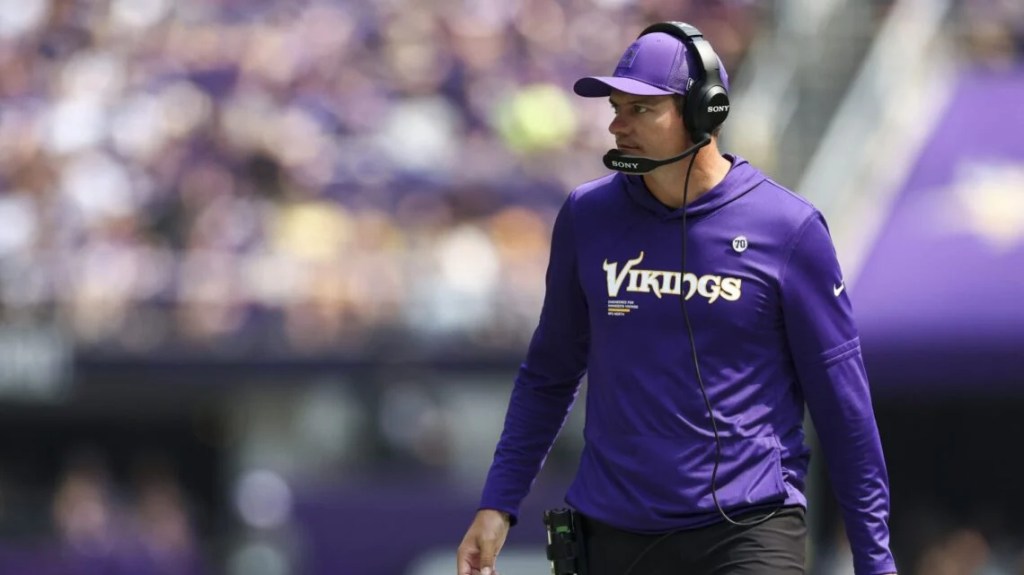
You may have come across a lot of discussion about quarterbacks and their fit in the “Kevin O’Connell offense” lately, and were left wondering what exactly that meant. What is the “Kevin O’Connell offensive scheme”?
Welcome to this multi-part series, where I’ll be doing a deep dive of Kevin O’Connell’s system. Starting with the roots and going through each portion of the offense, my goal is to help you better understand the scheme when watching on Sundays. If you play Madden, I will also be creating a playbook based on KOC’s scheme, allowing you to replicate the scheme in your own fashion at any time (more on this later in the series).
Let’s jump into the basics, and review where KOC learned from and implemented this scheme, with some general information to build on in the following weeks.
Scheme Background
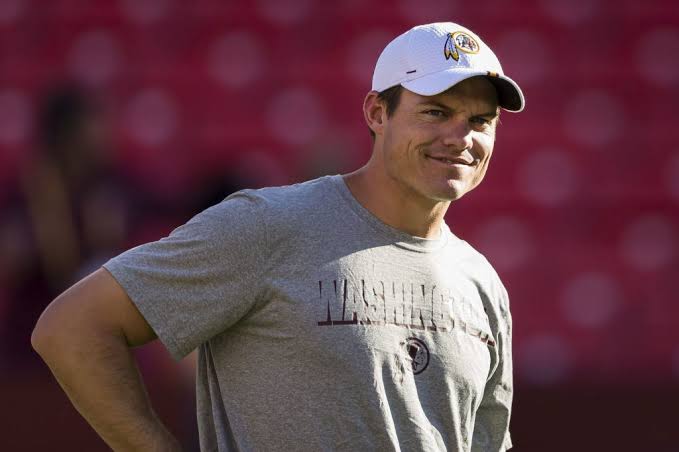
Kevin O’Connell developed underneath one of the premier offensive minds in the NFL today: Sean McVay. McVay, and some of the coaches that KOC has previously coached alongside, originated from the Kyle Shanahan tree, and KOC’s offense has adopted bits and pieces from both of their schemes. For the most part, Shanahan & McVay’s systems are similar, but there are differences in the ways Shananan likes to attack versus the areas McVay targets as opportunities.
Kyle Shanahan deploys a West Coast scheme, whereas Sean McVay schemes up a Vertical Passing style offense. Both have similar principles, patterns, and strategy, but the main difference is on the attacking areas of a defense and play selection balance. The offense KOC deploys is considered a more modern day “West Coast” scheme, but has more elements that represent the Vertical Passing game scheme. Let’s break down both styles to better understand the similarities and differences.
West Coast Scheme
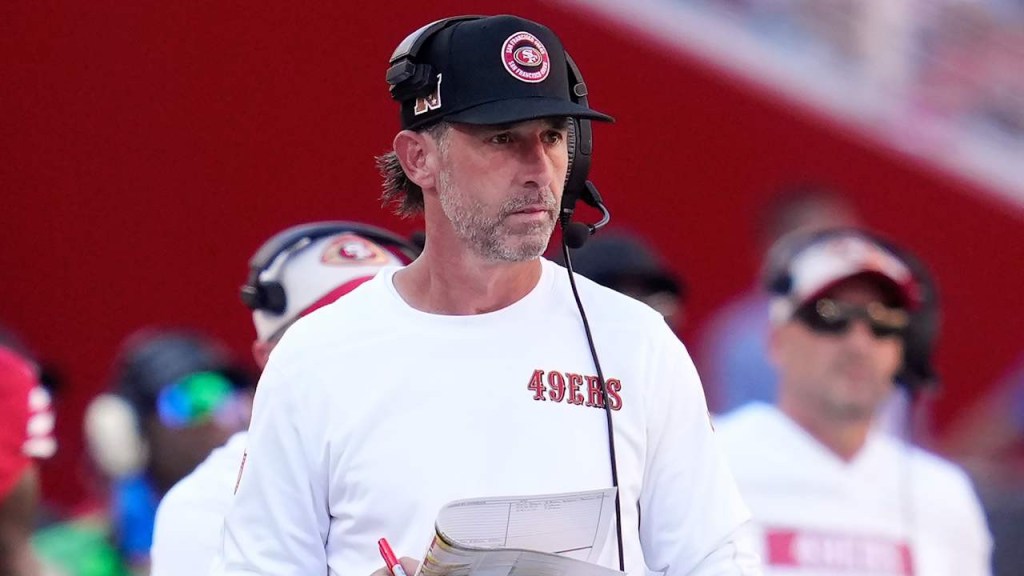
If you’re not familiar with the West Coast scheme, it was developed by Bill Walsh in the 1970’s and prioritizes a quick timing, horizontal passing game. It quickly grew popular in the NFL, and now a majority of the offenses across the league have implemented portions of the scheme into their own play sheet(s).
You may hear this all the time with the 49ers offense, but the goal is to take the play call, find the weakness in the defense pre-snap, and use timing to deliver the football before the defense can read and react. Each play call of a West Coast scheme is designed to attack the weakness of any style defense that’s called.
To simplify: there are typically two “shells” that a defense will run with their safeties on any snap:
- Single-high (Middle of Field Closed)
- Two-high (Middle of Field Open)
Teams can disguise and rotate their safeties at any time, but for today let’s focus on just these two general principles.
West Coast schemes are notorious for having “one side reads”, where if you draw a line down the middle of the defense, one side of the play call will beat a single-high shell, and the other will beat a two-high shell. The 49ers, and Shanahan, have mastered this, and have a system that has produced successful players at any position, including quarterback (see Brock Purdy and Mac Jones in 2025).
This offense gets the label of “QB friendly” because the ball is out of a QB’s hands quick and into the hands of a playmaker. The target line is in the short-to-intermediate targets of the field, with the QB doing 3 to 5 step drops, and throwing the football at the top of their drop. This timing is important, as it’s expected that the ball is in the air, and wide receiver route patterns are typically drawn to match the QB’s exact timing.
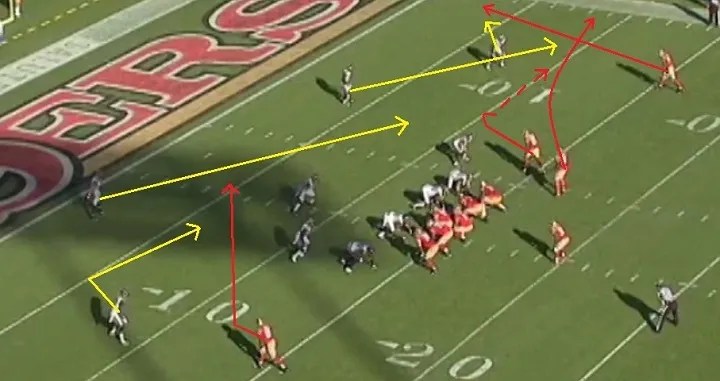
An example of this is the above play, which displays a general passing concept called “Stick” or “Y-Stick”. The passing strength, or play-side (at the top of the image), usually has three receiving options, with the read between the quick out by the second WR and the stop-shuffle (stick) option route by the WR/TE, depending on the formation.
The backside receiver will typically run a slant or vertical route, depending on how the corner is aligned against them. Depending on the defensive front and tendency, the RB will either: pass block for a blitz or run a flat route (quick out route only up to a couple yards past the line of scrimmage).
The play-side is stronger against zone defenses, and depending on the coverage, the read is between the out and option route. The backside slant/vertical route is stronger against man coverage. Either side will be timed up with a quick 3-stop drop by the QB, and when he hits the third step, the ball is usually coming out of this hands.
All in all, the goal of this play, and offensive scheme in general, is to keep the defense stretched out, and force them to play up closer to the line of scrimmage to eventually open up a deep ball shot at an opportune time. We’ll discuss how the Vikings offense adopts this more further in this breakdown.
Vertical Passing Scheme
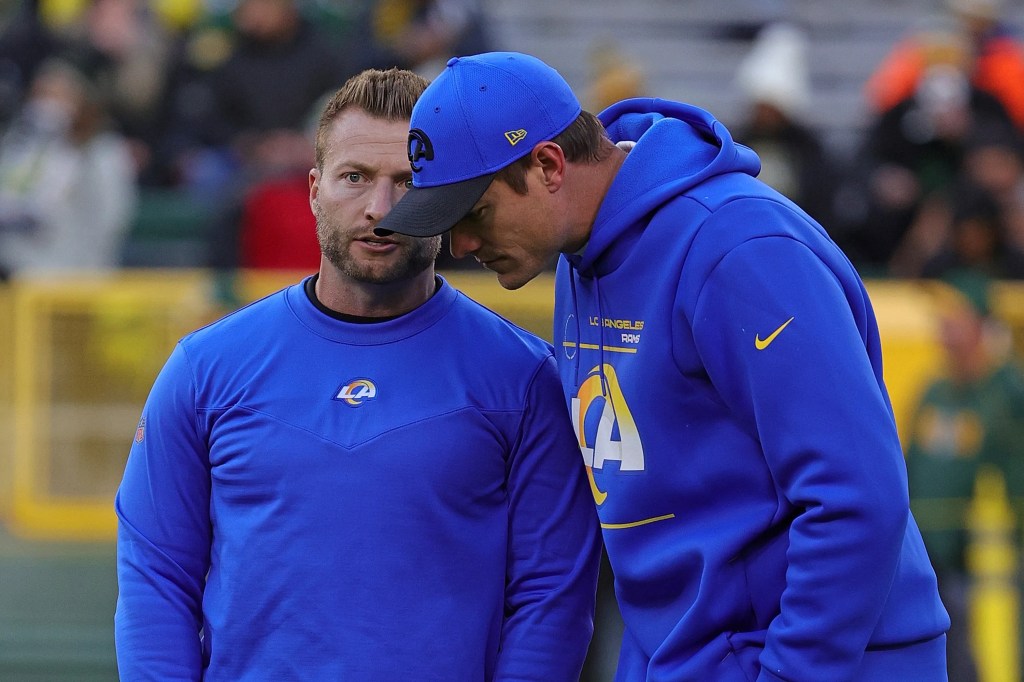
Prior to joining the Vikings, Kevin O’Connell had success with the Vertical Passing scheme that is deployed by Sean McVay and the Rams. This style of offense has delivered elite passing stats, including the Triple Crown Winner to Cooper Kupp in 2021 and the MVP to Matthew Stafford in 2025.
There is a major difference in this style of scheme in comparison to the West Coast scheme: this style of offense focuses more on the use of shotgun sets, and attacking the intermediate (10-20 yards) to deep (20+ yards) areas of the field. You will see various route combinations, including high-middle-low crossing patterns, deep digs (in-cut routes) and outs, posts and corners, and vertical-go ball shots. The goal of this scheme is to stand tall in the pocket and beat the defense in areas that can be high-lowed, or forcing a defensive player to decide if they stay deep, or attack and take out the shallow route.
This is why you see the likes of Cooper Kupp, Puka Nakua, and Devante Adams having so much success in this style of offense. These elite route runners will get opportunities to go one-on-one against a defensive back, or find an opening where they can sit down in a space of the defense and have a ball easily delivered to them.
An important part of this style of scheme is the run and play-action game. The Rams use a zone-style run scheme, which uses more agile offensive lineman to create holes across the defensive line to allow a running back to make a read and cut up the field. Any “zone” run scheme requires the lineman to all move in tandem to open up a hole for the RB to read and run through.
For this week, I’ll keep the run scheme general, but come back next week where I’ll be deep diving the run game within the Vikings offense.
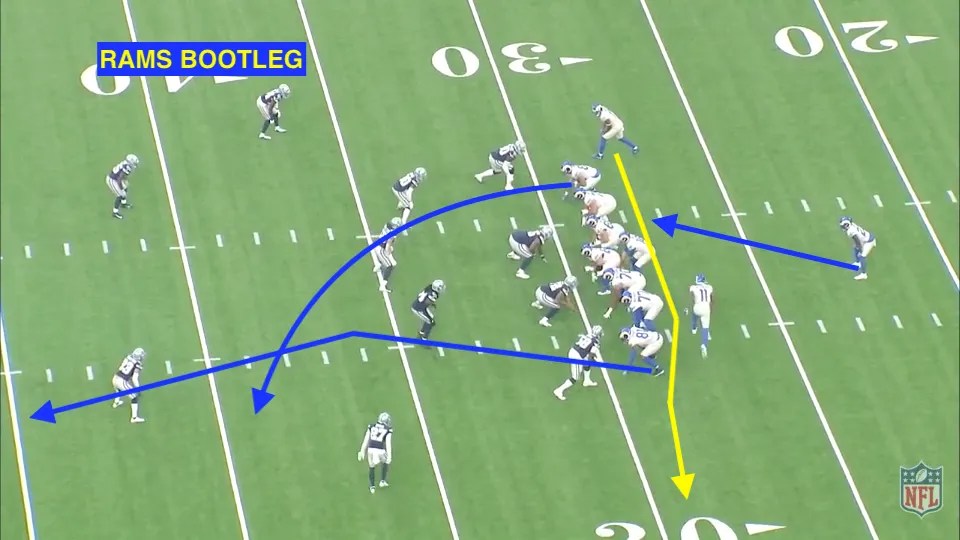
One of the staples of the Rams passing attack is the play-action bootleg. This is a pass blocking concept that has the QB moving away from the pocket, typically to the passing strength. The goal is to have the defense moving the opposite direction with a fake handoff to a RB.
In this play, the Rams are motioning the strong side receiver (typically known as the X/split end receiver), and faking a outside zone handoff. This will force the defense to read and react, and move towards the run fake, opening the opposite side of the defense to attack vertically.
The passing concept above is similar to a “sail” concept, with the bootleg tagged. A sail concept typically has one receiver running a vert/go route to clear out, with a corner route and a flat route to put the hook zone defender in a bind and forcing them to make a decision. This style of play is a staple in the Vertical Passing concept, and the Vikings have run it regularly during KOCs tenure.
This scheme most closely resembles what the Vikings want to do on offense, and it has been successful, even with the carousel of quarterbacks in KOC’s tenure thus far. We’ve seen fantastic numbers from the offense as a whole, as well as individual players, including Justin Jefferson, Kirk Cousins, Sam Darnold, Dalvin Cook, and so on.
Let’s go into more detail on the exact science of the Vikings offensive philosophy before we spend more time digging deep into the stats and strategy of each portion of the Vikings scheme.
Kevin O’Connell’s Version
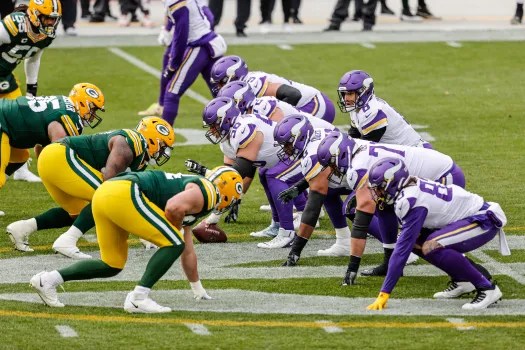
KOC’s offense is a combo of these two concepts, but is most closely tied to the Vertical Passing concept. On Sundays, you’ll see the Vikings offense run many zone-style run plays, and opening up deep pass plays with play action and motions.
While the offense has been slightly tweaked each year due to the revolving door at QB, the Vikings typically stick to the basics of these schemes: zone-run, timing passing concepts, and stretching the field vertically with a heavy incorporation of play action.
Since KOC joined the Vikings, they have been near the top of the league running “11” personnel (1 RB, 1 TE, 3 WRs) sets. Even in 2025, they ran this personnel nearly 63% of the time. While the league is starting to trend into heavier personnel, the Vikings have also adopted this, specifically with the use of C.J. Ham & Josh Oliver.
In 2025, the Vikings ran “21” (2 RBs, 1 TE, 2 WRs) and “12” (1 RB, 2 TEs, 2 WRs) personnel about 29% of the time. These two personnel sets have played an important piece in the run and play actions games, and I’ll further break that down over the next few weeks.
One of the big question marks with the signing of Kyler Murray was the mention of Kyler “struggling” with play calls while being under center. I highlighted these concerns as overblown in my breakdown of the Week 1 Free Agency Breakdown, and to further add-on: the Vikings have been nearly split in snaps from under center and from shotgun under KOC.
In 2024, with Sam Darnold, the Vikings were perfectly balanced, with 50% of snaps from under center in comparison to the other half from shotgun. In 2025, that balance was tweaked with J.J. McCarthy starting, with the Vikings playing more under center.
Depending on who wins the starting job, I would anticipate the offense trending to the starters strengths. With Frank Smith joining from Miami, I would also expect to see some “pistol” formations. Pistol formations have the QB about 5-yards behind the center, with the RB a few yards behind the QB. Both J.J. and Kyler can, and should, be able to operate from a pistol formation, and this should open up more creativity in the run and bootleg plays.
When online, you’ll see a lot of mentions of the Vikings being a true “West Coast” offense, but it’s more complex than that. As I detailed above, the objective of the West Coast scheme is quick horizontal plays, and the Vikings do run these quick concepts at various times. However, the scheme is more modern and emphasizes deeper attacks, which is mostly adopted from the Rams. One of KOC’s constant criticisms is the lack of quick timing plays, and the timing concepts of his offense more focus on 5+ step drop backs and hitting deep digs, posts, corners, and vertical routes.
In KOCs earlier days with the Vikings, they ran more quick drop back passing plays, something Kirk Cousins excelled at. Sam Darnold performed stronger in a more vertical system, which is what the Vikings offense has slowly been evolving into. 2025 was a journey as the game plans shifted from more vertical, longer developing plays to a quicker, more intermediate passing scheme by the end of the season. I expect the Vikings to fit their offense based on who wins the job for 2026, and I’ll do a deeper dive into the passing game in a later part of this series.
Final Thoughts
The Vikings offense is known as “QB friendly”, and it’s easy to see why. KOC has grown as a play caller in recent years, and while he’ll stick to the original game plan and make it seem as adjustments aren’t being made, it’s easy to see how the offense has adapted and changed in recent years.
From 2020 to 2023, with Kirk Cousins under center, there were a lot of timing routes and attacked the intermediate parts of the field, which is what the offense morphed back into towards the end of 2025. 2024 was a great year for the vertical passing game, and I wouldn’t be shocked to see if the team tries to get back into that mode for 2026.
The team has superstars littered all over the field on offense, but the biggest star is the play call in this offense. KOC, and his scheme, believe that they can draw up any play call to beat any defensive coverage. In 2024, this mostly was true, but in 2025, when things weren’t clicking it was tough to watch.
I’m excited to go into more detail about the scheme over the next few weeks to really break down what they excel at, and where the areas of opportunity are for 2026- especially with a couple of coaching changes. Come back next week as I do a deep dive of the Vikings run-game scheme, and help make you an expert when watching games this Fall.
Thank you for taking the time to read my latest article! If you enjoyed the read, please share with your friends and family. Don’t forget to connect with me on your preferred social network to continue the conversation, share your thoughts, and to stay up-to-date on the next weekly article.

 Skol To Go
Share your thoughts