16 minute read
Kevin O’Connell is a strong believer in a pass first offense, but how exactly does he draw open the receivers? When watching on Sunday’s you may see plenty of route combinations, but what is their passing scheme?
Welcome to the next part of the Understanding the KOC System series. This week, we are focusing on the Vikings passing offensive scheme, and the general principles it follows. This week I’ll cover:
In case you missed the previous installments, spend some time learning about:
Over the last few weeks, there have been numerous articles, discussions, and videos online covering whether Kyler Murray and/or J.J. McCarthy will fit the Vikings passing game. Let’s dive into the Vikings pass game to better understand KOC’s scheme.
Passing Game Basics
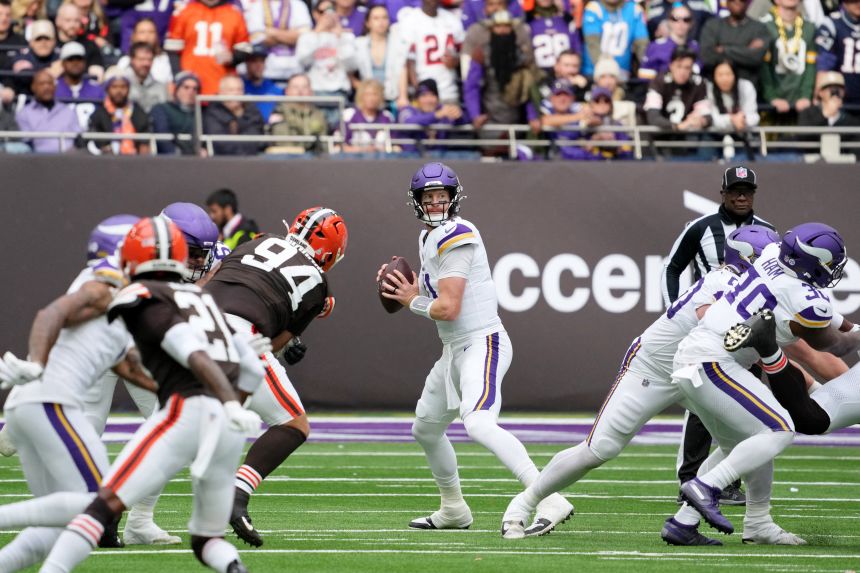
Before we go into detail on the Vikings passing offense, let’s first go over general passing rules that most teams adopt. If you want to skip ahead into the Vikings-focused write up, click here.
Every football team has a preference of routes, combinations, and hot routes that they will run over the course of a game. This can include standard passing concepts, or tagging specific routes or progressions to get certain players open.
Most passing offenses will run similar concepts and route combinations, but reads and progressions may differ from team to team. This can be for several reasons, including offensive scheme, receiver personnel, and QB preferences and strengths.
Across the NFL, there will be concepts that are more quick hits, targeting the short part of the field, or from the line of scrimmage (LOS) to the 10 yard line.
Some teams will target the intermediate part of the field, or 10-20 yards past the LOS. This can be targeting the inside or the outside of the defense, depending on game plan and QB passing strengths.
There are also offenses that take deep shots, or 20+ yards past the LOS. This is where the Vikings typically are with their passing offense, and we’ll take a closer look later in this article.
Looking back to the first part of this series, where the basics and KOC’s system were introduced, I covered how offenses typically setup their passing offense based on the defenses “shell”, or how they align their safeties.
Almost every defense will align in either:
- Single-high (Middle of Field Closed/MOFC)
- Two-high (Middle of Field Open/MOFO)
But what exactly does this mean?
Single-high, MOFC, is when one of the safeties (typically a free safety) plays in the middle of the defense in a deep zone. This usually means the defense is in either:
- Cover 1 – corners are in man-to-man and the free safety is in a middle deep zone, protecting the middle deep part of the field
- Cover 3 – zone defense, where the free safety plays middle deep third zone, the two boundary/outside corners play outside deep third zones
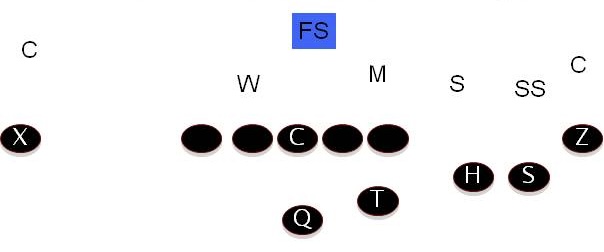
This is considered “middle of field closed” as the free safety will provide support for deep-in breaking routes, like posts, seams, and deep dig routes.
There are a few weak spots on the field when playing MOFC coverage:
- Seams
- Flats
- Intermediate outs
- Comebacks
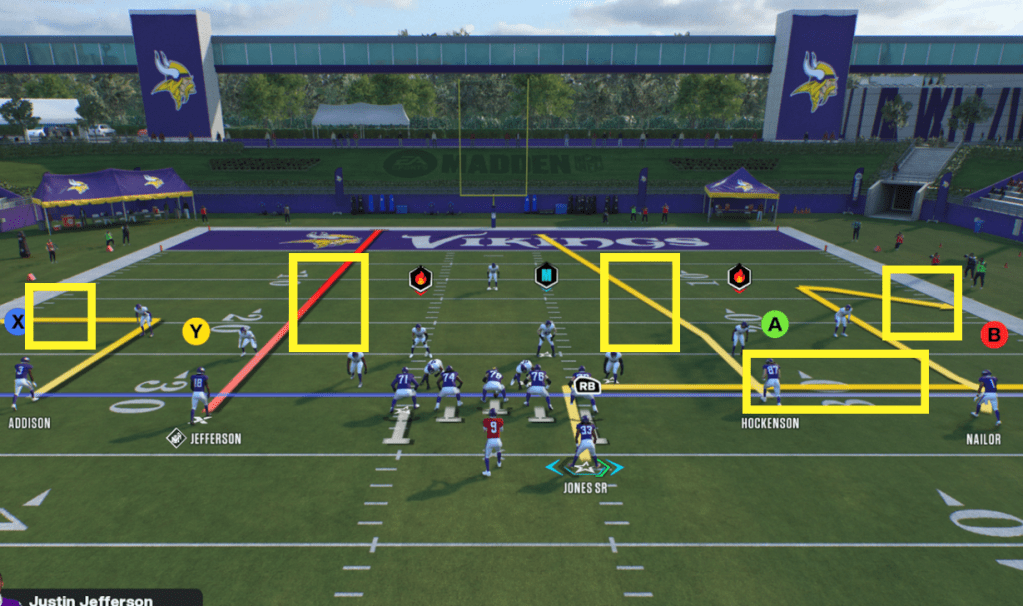
Depending on whether it’s man or zone coverage, crossing routes can be strong against single-high, essentially forcing the deep middle safety to pick one crossing route to support on. We’ll go into more detail in the Vikings portion of this breakdown.
There are various combinations and plays a defense can run out of single-high, but for now, I’ll keep it general. If you’re interested in learning more about single-high defensive schemes, let me know in the comments below.
Two-high, MOFO, is when both safeties (FS & SS) are playing high/deep coverages. The NFL has started readopting two-high looks again, especially with how the passing game has evolved and exploded in recent years.
Two-high looks can result in many different defensive coverages, including:
- 2-Man – corners playing man-to-man, with two deep safeties playing deep half zones over the top
- Cover 2 – A.K.A. “Tampa 2”, where corners jam outside receivers inside, with the safeties playing two deep half zones
- Cover 4 – corners & safeties each play a deep quarter zone. This is considered a “match” style coverage, meaning it will start in zone, but turn into man-to-man as receivers enter the corner/safety zone
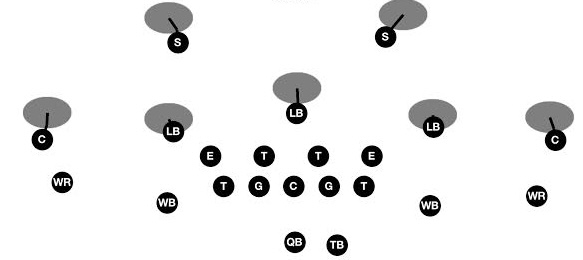
These schemes are considered “middle of field open” as the safeties are responsible for the two deep halves, or quarters, of the defense, leaving the area between them as vulnerable. Most two-high shell defenses will use a linebacker to plug the middle area of the defense, and there are only a handful who can successfully plug and prevent a deep middle shot. Fred Warner is an example of being an elite plug defender in two-high shells.
The goal of a two-high shell is to reduce deep shots and forcing teams to pass in the intermediate and short areas of the field, where the defense will rally and tackle. However, there are various route combinations that can be lethal against a two-high shell, including:
- “Hole shots” – go routes up the sideline between the corner & safety
- Posts
- Corners
- OTB (over the ball) – routes stopping right over the center a few yards past the LOS
- High-lows – short and intermediate routes, targeting a single defender to make them choose which to cover
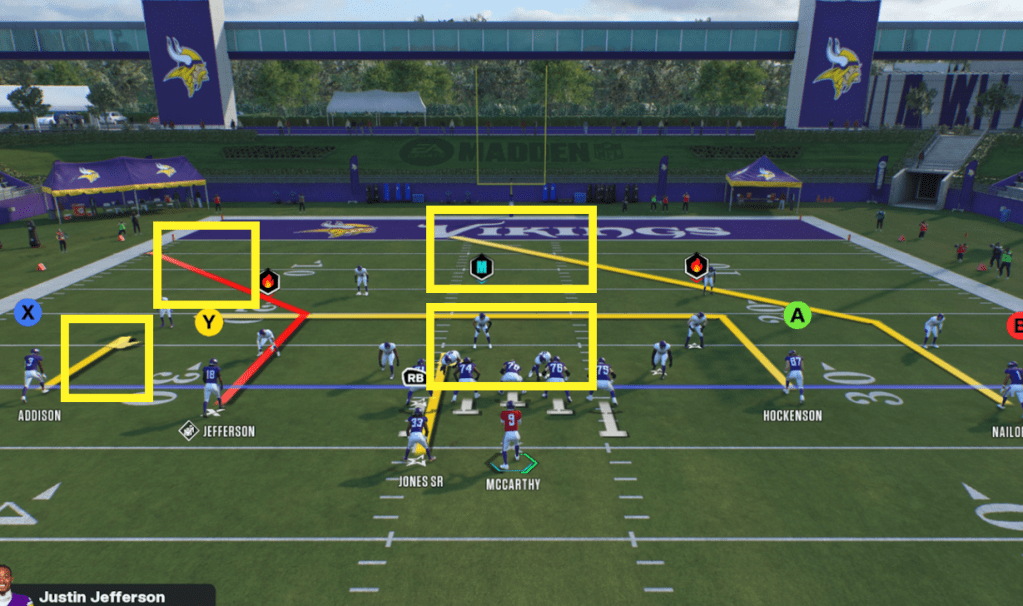
As mentioned above with single-high coverages, there are various combinations and plays a defense can run from a two-high shell. If you’re interested in a deeper dive, leave a comment below and I’ll create an article later this off-season discussing all of the coverages in more detail.
The last thing to cover in this passing game basics section is o-line pass blocking. I won’t go into too much detail here, but generally, each team has a standard set of rules that they follow with every pass play. This can include base blocking, full & half slides, and inside out blocking.
Going back to the Run Game Breakdown, the “Mike” linebacker will also get ID’d here, as this tells the o-line who the middle of the defense is, and can determine which blocking style they will deploy for that play.
Pass blocks are mostly driven by the box look the defense shows. The “box” is the area of the defense between the tackles to about 5 yards past the LOS. This usually accounts all of the d-lineman and linebackers or safeties in the box.
The defensive strategy is to find mismatches and overloads that the o-line can’t block properly and to get to the QB as quickly as possible. This includes in standard 4-man rushes and blitzes. There are numerous combinations a defense can use, and it’s extremely important the o-line is in the proper blocking scheme to give the play time to develop.
As mentioned, the blocking schemes consist of:
- Base – man-to-man blocking, each o-linemen is accountable for a man on the defensive line, usually the man in their gap
- Zone/”most dangerous” – used when the box is packed with only 5 linemen blocking. Each linemen will pick up a rusher, starting with the rusher closet to the center
- Half slide – used when defenses have an overload look on one side of the ball, using zone for one side and man on the other. The zone side is responsible for any blitzers, with the man side picking up any one in their gap
- Full slide – the o-line will all take the defender that’s in their gap in the direction of the slide. This is best if the furthest outside defender opposite of the slide is a LB or S, as the RB will be responsible for picking them up if they blitz
Here’s an example of a left half slide protection, with a RB plugging in to pick up and blitzers on the opposite side of the half slide call:
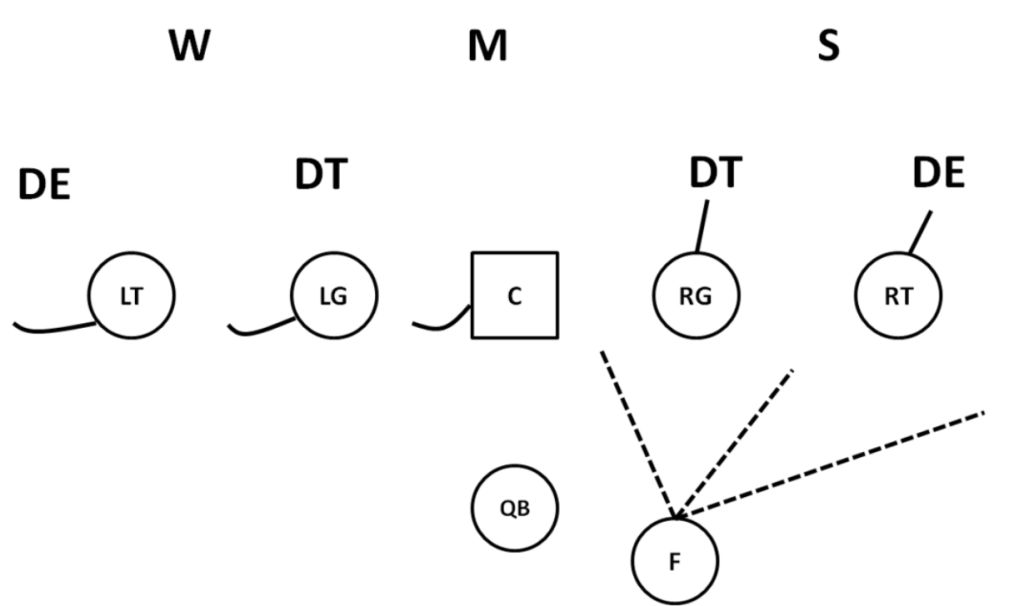
Passing blocking can be viewed like chess. The defensive coordinator will throw multiple looks out to try to confuse the o-line and generate easy pressure. The center and QB need to be on the same page when calling protections, especially as defenders shift around pre-snap.
Now that we have covered the pass game, let’s get into the specifics of the pass game scheme deployed by Kevin O’Connell.
Vikings Vertical Passing Scheme Breakdown
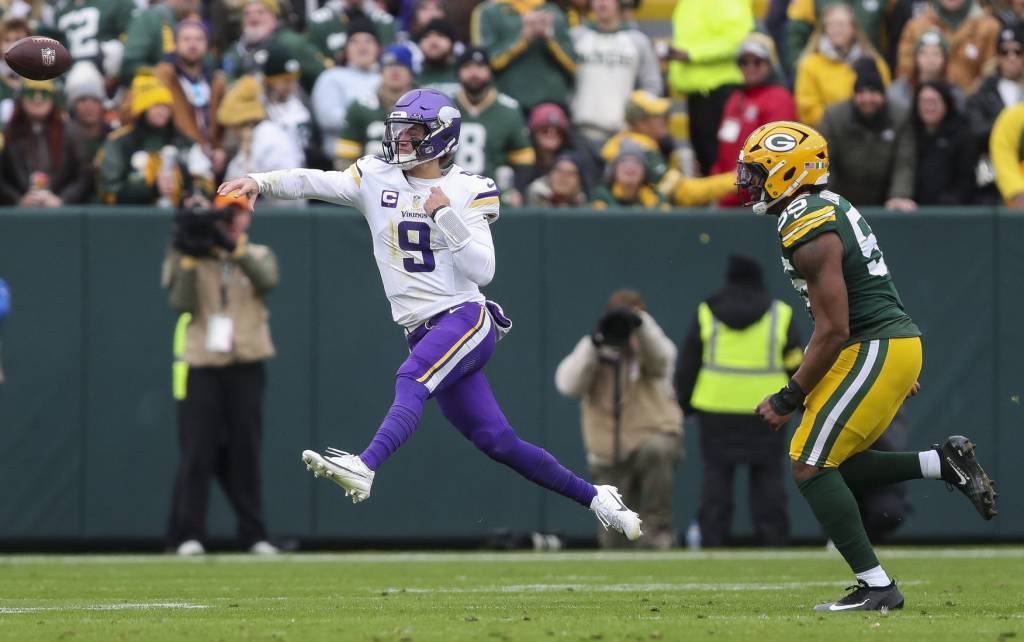
The Vikings heavily utilize the passing game, at roughly 60% of their offensive plays, and are among the highest in the NFL. Since 2021, the Vikings passing offense has averaged:
- 34.7 pass attempts per game
- 234.1 passing yards per game
- 7.3 yards per pass attempt
- 66.9% of team TDs via passing plays
All of these averages include the 2025 season, which similar to the rushing offense, skewed the averages down. 2025 was the roughest the passing offense has been during KOC’s tenure, and should be looked at as an outlier.
Outside of 2025, the passing offense has been in the top-14 for almost all major passing statistics, and was top-5 in ’21, ’22, and ’24. This includes, pass yards and yards per attempt at a per-game basis.
These averages showcase a high volume and strong passing offense, which backs the claims that I mentioned earlier. KOC has a strong belief in his Vertical Passing scheme, which he inherited from Sean McVay’s system in LA. There are a lot of similarities to the Rams pass game, especially looking at the usage of Justin Jefferson in comparison with Cooper Kupp in 2020.
But what exactly is a Vertical Passing Scheme, and why is KOC’s version so highly regarded? Here are some essential concepts to know:
Vertical Passing Scheme Essentials
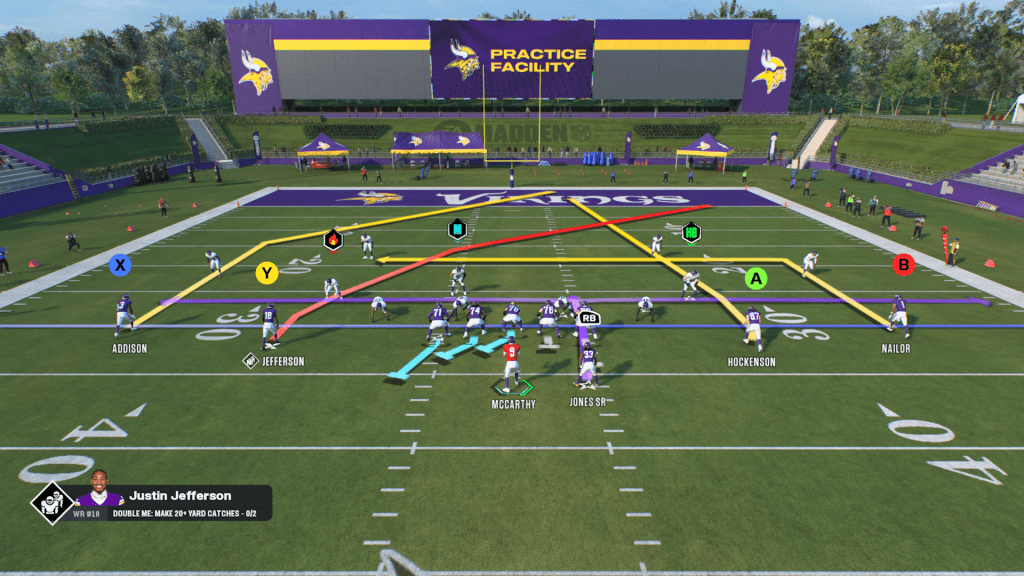
Traditionally, vertical passing schemes attack the field with vertical routes, that may include:
- Gos
- Seams
- Posts
- Corners
- Deep digs (ins)
- Deep outs
- Deep crossing routes
With the goal for the QB to stand in the pocket with deep drops (5-7+ steps) to allow the longer routes to develop. This scheme utilizes various combinations of these routes during the same play, with the goal of putting defenders in a bind.
There are hundreds of combinations of routes that will be used, with the goal of stressing the deepest defenders to cover longer and be on an island against the receiver(s). The goal of any deep zone defender is to stay over top and not allow a pass over their head. The best Vertical Passing scheme plays forces a deep zone player to stay over top, allowing for another deep route to come open slightly shallower in a space between the intermediate defender, and where the deep defender just voided.
This style of offense also puts a lot of stress on the linebackers and box defenders. They need to get depth in their zones, which typically is in the intermediate part of the field in the middle. They can also be targeted in mismatches when in man coverage, and depending on the offenses personnel, can be a dangerous mismatch for any offense. These mismatches is when you see the deep digs (ins) and posts come into play, as it asks a lot of a LB to turn and run against some of the fastest players on the field.
This is why you see the likes of Puka Nucua, Justin Jefferson, and Cooper Kupp, back in the day, put up monster stats and seemingly feel like they were unguardable. Defenses try to “bracket”, or put multiple defenders on them, to limit the explosive plays, but this opens up weaknesses in other aspects of the defense, and creates shots to other WRs & TEs, or dump offs to RBs to pick up big gains.
This type of offense can be an “everyone eats” style, allowing for anyone, and everyone, to have a productive day in the office. Offenses who leverage Vertical Passing schemes need personnel, like mobile TEs and versatile WRs who can win against any defender and vertically stretch out a defense.
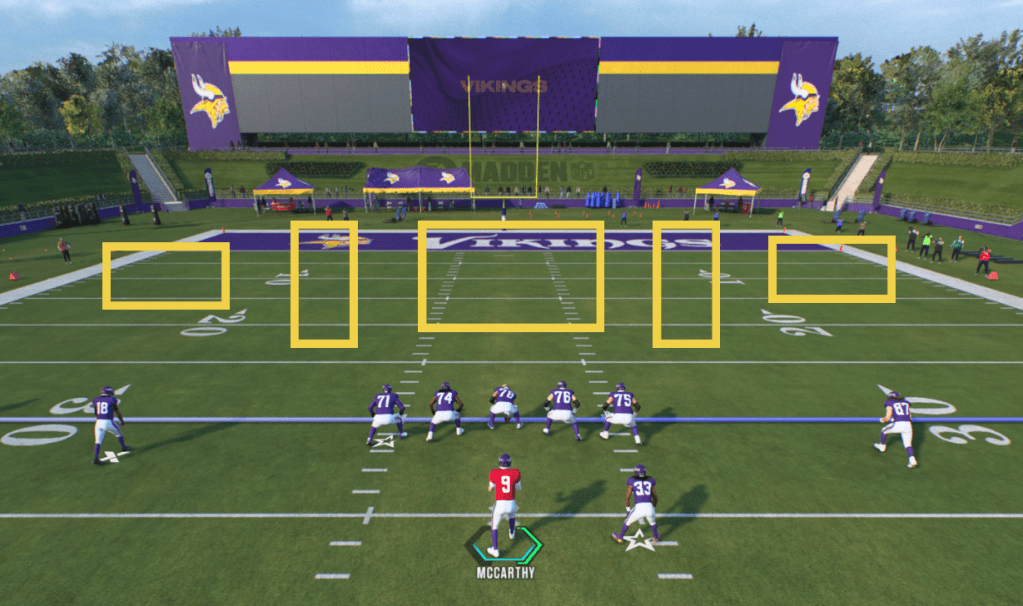
These are the landmarks that Vertical Passing scheme offenses target. The goal is to hit the deep areas of a defense, and the defense’s shell will determine which window will be targeted.
These windows are often attacked with gos, posts, corners, and digs, with another man running over the top of the defense, and another route shallow of the main target, forcing defenders to “choose” a route to cover and allowing one to get open.
The name “Vertical Passing” may have you thinking that it’s fully dependent on a strong QB, with great WRs. However, a strong run game is extremely underrated and required in this offense. Even if it’s not leveraged as much as passing plays, where it’s only being used around 40% of the time, getting chunks on the ground and establishing a run game opens up the play-action passing game.
Play-action is critical for any offense, but especially in Vertical Passing schemes. Keeping a defense honest, and forcing their box defenders to cheat up, or keep their eyes in the backfield, allows the vertical routes to get behind them quickly and creates explosives.
The best play-action teams will make their run game blocking and play-action blocking identical, forcing defenders to read their keys and not be fully certain what play is developing. Then, the offense can take a shot on a mismatch, or in a window that is open due to a defender not getting to depth in time.
A lot of teams will target the middle of the field, just behind the LBs on play-action passes, but you will also see some concepts that target the perimeter of the defense. If a DB is more aggressive in a run fit, then the hole shots and corner routes can develop nicely behind them.
Vikings Pass Game Strategy
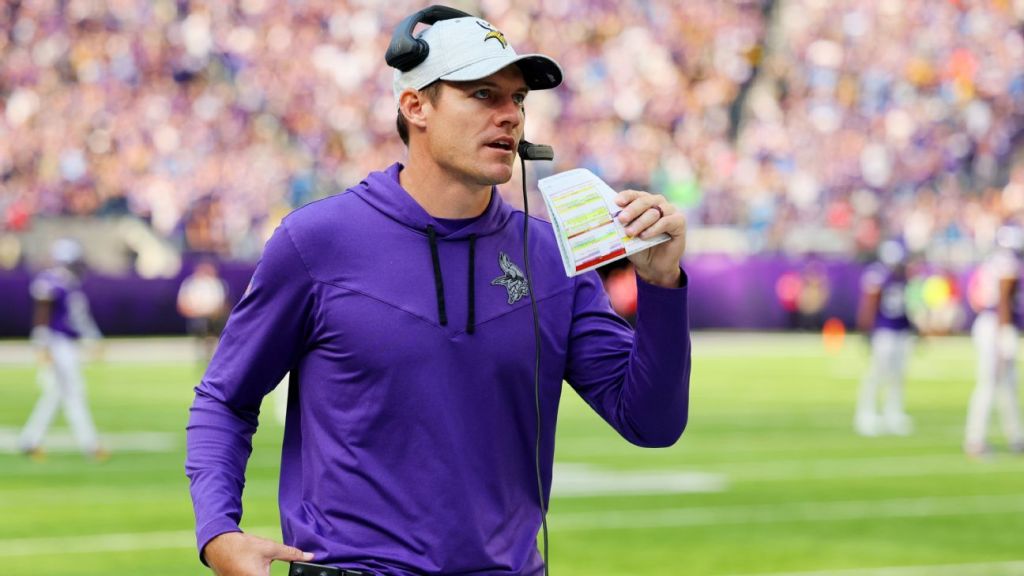
The Vikings pass game is KOC’s specialty, and is the engine that drives the offense. This offense has the label of being “QB friendly” and KOC’s theory is that the play-call is the true superstar on the field. Why do all of the experts and pundits say this?
Many attribute this to the playmakers across the field, and the numerous QBs who have played and played positively. As a matter of fact, since 2021, the average passer rating in KOC’s offense has been 92.9, and has been in the top half of the league every season except for 2025.
It hasn’t just been with a carousel of QBs, either. Since 2021, the offense as a whole has had key players miss significant portions of seasons, including Justin Jefferson, T.J. Hockenson, Christian Darrisaw, and Aaron Jones, just to name a few. Although the Vikings have Ferrari’s all across the offense, KOC’s system has proven to be more QB friendly factoring in the injuries.
In almost every season since KOC took over the reigns, the Vikings have ranked in the top-5 in deep drop pass attempts per game. A deep drop game means QBs taking 5-7+ step drops on a play before they throw the football, allowing their WRs to get more vertical in their routes.
The Vikings have been pretty even on snaps from under center to snaps in shotgun. However, when they line up in shotgun, there is a heavier tendency to throw the ball. In 2025, the Vikings had:
- 525 shotgun snaps
- 429 under center snaps
Of the 525 shotgun snaps, they passed the ball on 366 plays, not including plays where a QB ran the ball of got sacked.
Of the 429 under center snaps, they passed the ball on 118 plays, not including QB sacks and runs by the QB.
This shows a heavy reliance on pass plays out of shotgun, which is a tell for any defense. I do expect this to evolve in 2026, and KOC has already hinted at heavier use of shotgun formations.
I also expect to see more use of runs out of shotgun as well. The Vikings, and KOC, need to be more balanced when running the football. In 2025, they ran the football:
- 109 times out of shotgun
- 301 times from under center
In total, the formations may be close to split in usage, but the play types from both are heavily skewed. For the Vikings offense to return to its previous expected results, KOC needs to find a better balance when selecting play types out of certain formations.
One area of KOC’s scheme that differs from McVay’s is the use of play action out of shotgun. The Rams have been near the top of the league with play action use, and this is an area of opportunity the Vikings need to take better advantage of. This also means they need to run the football out of shotgun formations more often, or else defenses will continue to sit back and wait for the WRs to come to them.
I expect to see a few philosophy changes, and the addition of Frank Smith should bring more versatility and creativity to shotgun and pistol run plays. With Kyler and J.J.’s ability to use their legs, more read options will help keep defenders hesitant from fleeing deep int their zone, opening up lanes for Jefferson, Addison, and Hockenson.
Final Thoughts
As the 2026 off-season continues, I’ll continue to cover each of the QB fits in this offense. With a competition expected between Kyler Murray and J.J. McCarthy, there are a lot of questions on how the offense will be morphed to fit their individual play styles. With KOC’s scheme today, I don’t expect as much molding as many would hope for.
This scheme as a whole has slightly evolved over the years, but has remained true to its core. It’s too early to point to what adjustments and changes we’ll see in 2026, and I do anticipate another heavy-usage year of the passing game, focusing on deeper developing concepts. As detailed in the run game breakdown last week, the Vikings are looking to adopt more gap-scheme run plays, which should help the offense become more aggressive and efficient in the run game.
Partner that with a mobile QB, yes, J.J., too, and the passing game has the potential to return to form, if not be stronger than previous year averages. The one area that I’ll be looking to see more adoption with is the quick passing game.
The offense can add another wrinkle with quicker, 3-step QB drops and getting the balls in the hands of Jefferson and Addison, forcing the defense to move up and play more aggressively. That will only unlock more vertical opportunities, especially if the run game goes stagnant. KOC has proven he can design a deep route combination, and utilizing more setup plays early in his script can make his later-in-game calls even more dangerous.
Now, will KOC adopt this? We’ll have to wait and see in August…
Thank you for taking the time to read my latest article! If you enjoyed the read, please support the blog by liking and commenting below. Sharing with your friends and family would go a long way as we continue to build this community. And as always, SKOL!

 Skol To Go
Share your thoughts