15 minute read
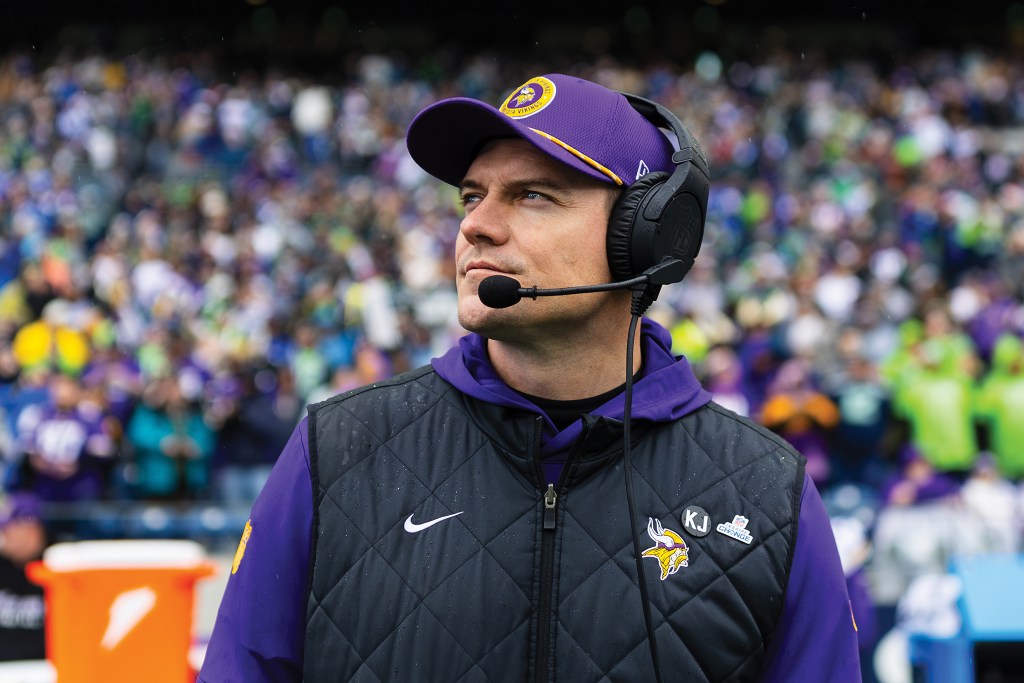
The Vikings game plan may change week-to-week, but it mostly stays true to its form. KOC will make tweaks depending on personnel and the opposing defense, but what exactly does the script look like?
We’ve arrived to the finale of the Understanding the KOC system! This final article will highlight putting everything we’ve covered together. Everything from the formations the Vikings use all the way to game scripting and specifics will be covered in this write up.
In case you missed it previously, learn about:
In the following, we’re going to put all of this together, explaining how KOC combines the run and pass game schemes, and builds a game script for each week. It does differ depending on opponent strengths and weaknesses, but you’ll have a general idea and be able to better decipher what the offense is trying to do.
Let’s get started!
Formations
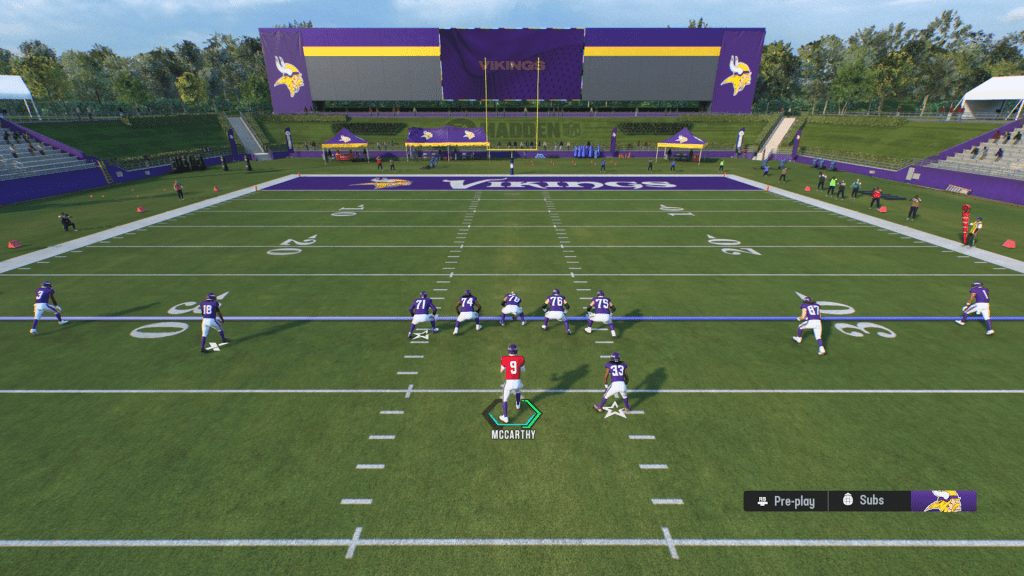
The Vikings have been nearly split in the use between shotgun and under center sets since KOC took the job in 2021. They have also been towards the top of the league lead in the use of 11 personnel. With that being said, what formations do the Vikings typically use each week?
Every single offense in football will change formation with every snap, even if the personnel stays the same. However, most teams do have specifics trends and landmarks depending on the play and the look they want the defense to give.
Some will run more spread out formations, where WRs will be as far as a few yards wider than the numbers on the field. Some offenses prefer tighter formations, where all-22 players will be within a few yards of each other.
For the Vikings, they have run a blend, like all teams do, but there is a preference: condensed formations. KOC likes to lineup the WRs in bunch style formations, where multiple players will be within a couple of yards before the snap. He has also regularly used WR tight formations, including:
- Nasty – one WR will be close to end man of LOS
- Tight – both WRs will be close to end men on LOS
- Close – every receiving threat will be close to the end men on the LOS
Where, depending on the above tag, will tell which player is going to be closer to the tackle or tight end at the edge of the LOS.
Now, what are the benefits of running condensed formations?
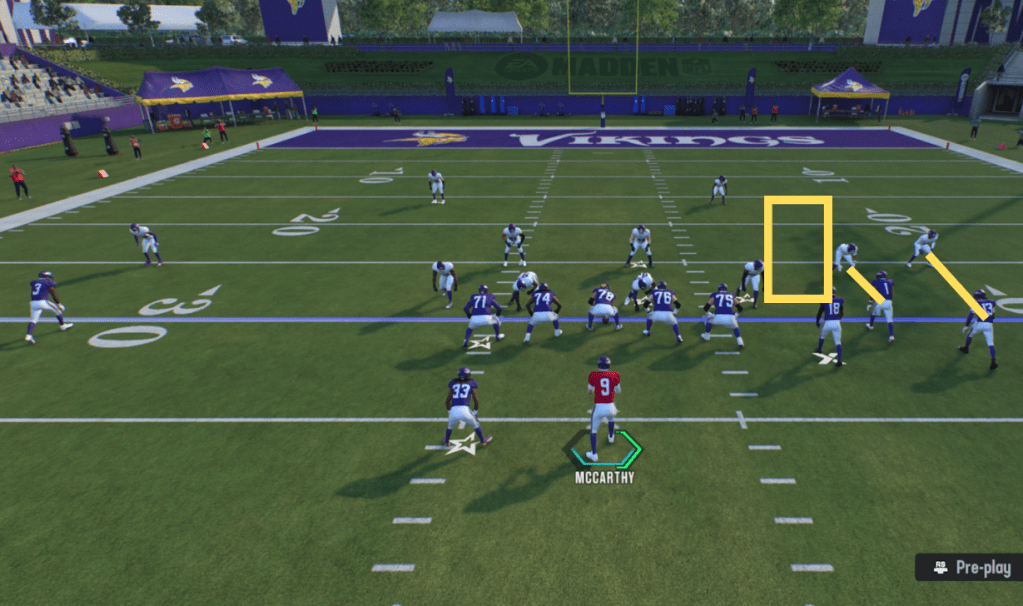
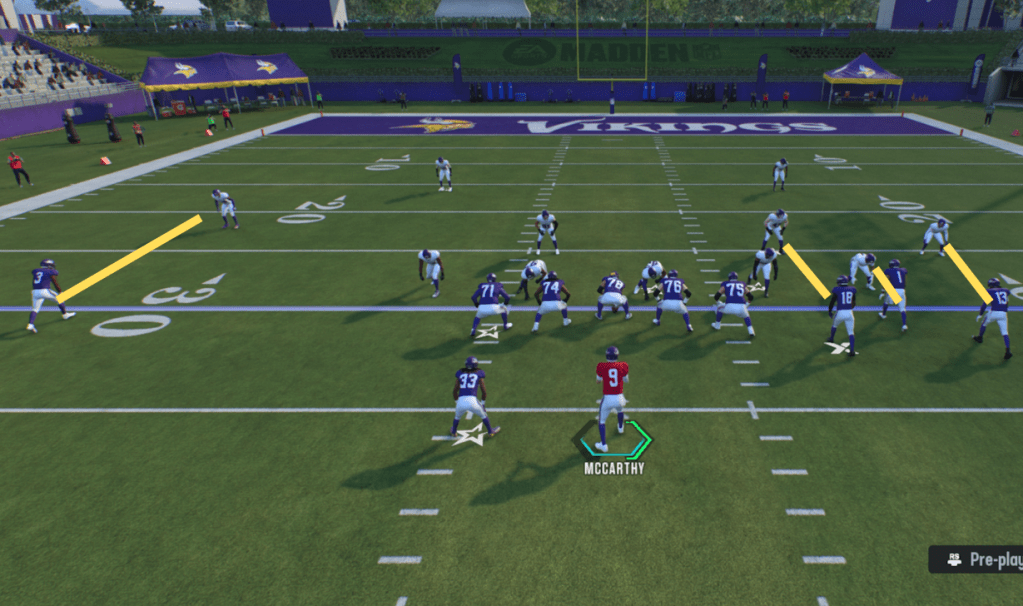
The biggest advantage is forcing defenders to show their hand in what style of defense they’re running. It can be an easier tell for a QB to determine if a defense is running man or zone coverage based on the DBs alignments.
If a defense is playing zone defense against a condensed formation, the defense doesn’t need to match defenders onto receivers. These looks may include a man or two covering a group of receivers, with a box player playing between the most inside WR and the end man on the LOS. This is where a QB will see a numbers advantage, like the below:
If it’s man coverage, then the defense is forced to have an even look, where each defender will be over a receiver. Here’s an example of man coverage pre-snap:
Being in condensed formations also allows offenses to get the matchups they want to attack, as teams can run “switch” releases. A switch release can be drawn up in all sorts of ways, and it’s when a WR or two run inside/outside of each other, making the defenders either switch assignments, or communicate to avoid running into each other.
A few popular formations that KOC uses include:
- Bunch TE
- Bunch Trio (3 WRs)
- Bunch Nasty
- Tight Y-Off (Y = TE)
- Gun Trio Tight
- Duo Close
The above will be dependent on personnel, and a threat like Justin Jefferson is a big advantage, as he can lineup in any WR position and the defense will need to adjust. With the Vikings running a lot of 11 personnel, Jefferson will lineup at the X, Z, and H (slot receiver).
This makes the formation adjustments change, as the look may be similar, but the way a defense needs to play and lineup is completely different.
Not only does moving Jefferson to different slots help, but KOC also leverages a lot of pre-snap motion. This has become a trend that has taken over the NFL and is a major talking point now-a-days. You’ll hear announcers mention how often a team will, or will not, put a man in motion, and some of the best offenses find ways to move their best player(s) to find advantages.
Since 2021, the Vikings have leveraged pre-snap motion on more than 51% of their offensive snaps. This number was down slightly in 2025, with the huddle breaking late in the play clock, and the spike in pre-snap penalties. I expect this to be an emphasis again in 2026 and get back to their average.
Pre-snap motions are essential for two reasons:
- Tells the QB what kind of coverage the defense is in
- Opens up mismatch opportunities with primary receivers
On Sundays, you’ll see Justin Jefferson, Jordan Addison, and T.J. Hockenson do shifts and motions, all the way from quick shifts, to running across the field to quickly change the formation and gain an advantage against their defender.
With Frank Smith taking lead on the run game strategy, we’ll see more motion and shifts pre-snap to gain a numbers advantage in the blocking game. This forces the defense to shift, putting them in weaker positions to fit their assignments and gaps.
Adding a QB like Kyler Murray will help with the run game, as noted here, and with the use of RPOs and run options, formations and motions will provide a big advantage. Kyler brings a horizontal threat the Vikings have long needed, forcing edge defenders to slow play their assignment and hesitate to get up field. With shifts and motions, expect for KOC to sprinkle in new looks, including Pistol formations, and wide RPOs to get the ball in the hands of Jefferson and co..
Game Scripting
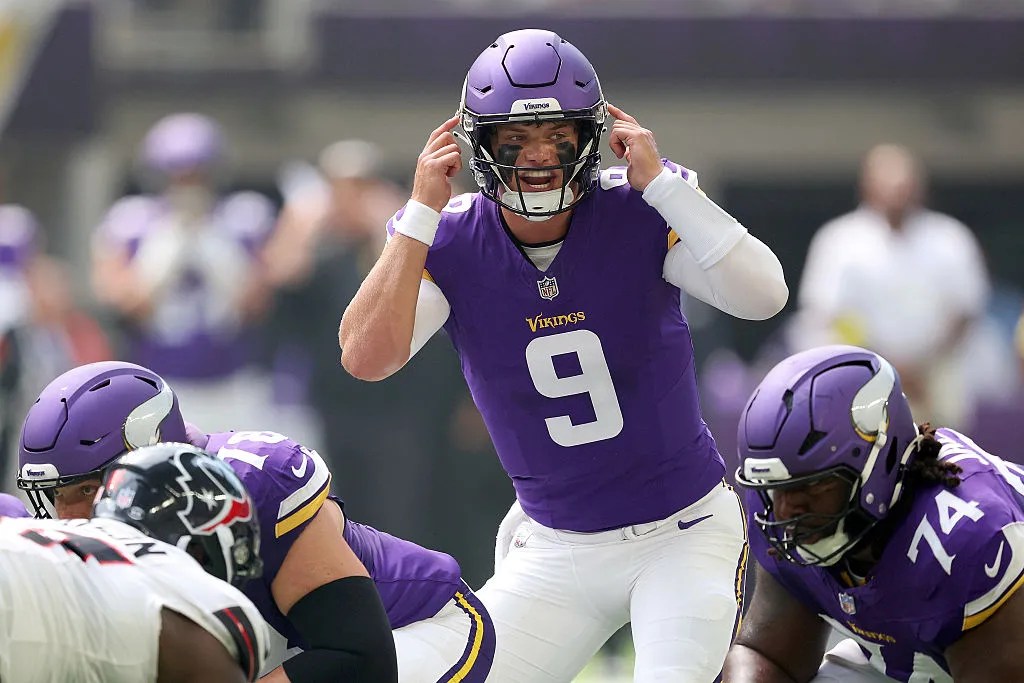
Now, let’s put everything we’ve learned together. For the last four weeks, we’ve gone through the ins and outs of KOCs scheme, but how exactly does he put together a game script?
The game script is the most important part of an offense. You may have heard the term “play caller” before, and anyone in the NFL can call plays. However, the best in the NFL are more known as “game callers”, as it requires skill and understanding to call plays for a full game.
Calling a game means setting up a defense to connect on a big play. KOC has referred to this before, but serving a defense the same look and running multiple plays with various elements from the same pre-snap look is key to setup a big play and confusing the defense.
The Vikings game scripts over the years tend go be on the more aggressive side, especially with the nature of a vertical pass-first scheme. KOC views first downs as opportunity downs. He believes there’s a chance to get ahead of a drive, forcing a defense to play more passive and on their heels.
Since 2021, the Vikings have been towards the top of the league in passing first down plays. They average about 12 pass plays per first down per game, ranking in the top-10 every season, except for 2025. They’ve leveraged a lot of play action on first downs, attempting to get more aggressive defenses downhill to open up vertical shots early in an offensive series.
This has been a stark change from previous regimes, with what many refer to as the “run, run, pass, punt” offense. Frustrations can still come with a more aggressive play selection on early downs, but there are major payoffs if and when it works.
The NFL has changed a lot in recent seasons, including:
- Shorter fields with kickoff rules changing
- More aggressive play callers, going for it on more fourth downs than ever
- Analytics being more involved, showcasing more opportunities
- More offensive focused game, with penalties favoring offenses more than ever
KOC takes all of the above into consideration as game scripts come to light. Calling a pass play on first down that may not always result in a positive gain, but KOC rolls the dice in hopes of the middle downs being successful.
However, the run game has also been efficient on first downs, and I wouldn’t be surprised if it was more of a focal point heading into 2026. Establishing a strong early down rushing offense will open up the vertical passing game, especially with the use of play action.
KOC has mentioned the desire for more run play styles, including duo, and gap scheme runs. This allows the offensive lineman to start the drive with a nastier streak, allowing them to ID their man, and use their strength to block and overpower them. How does this help though?
O-linemen can get an early drive advantage by firing off the ball and blocking their man. This makes the d-linemen slower off the ball since they need to better play their gap assignment to stop run plays. They don’t get the chance to pin their ears back and rush the passer.
With KOC, the staff changes, and the change of o-line personnel over the last couple of years, look for more early down run plays. KOC highly leverages a wide zone run game, forcing defenses to play sideline-to-sideline. As defenders start hesitating to better fit their runs, KOC will find the perfect time to call a play action call to sneak one of their receiving threats right behind the aggressive box defenders on digs, crossing routes, and digs.
Middle Down Tendencies
With KOC’s tendency to be aggressive on first down, that usually means the middle downs are the critical downs during a drive. Most teams prefer to stay out of second & long and third & medium scenarios, as the defense gets a huge advantage on the play.
In a vertical passing scheme, like the Vikings, this can cause troubles. O’Connell wants the QB to sit in the pocket and allow deeper routes to develop. This can be a recipe for disaster during the critical middle downs, as teams can be more aggressive, by blitzing and forcing the progression to happen faster.
A sped up QB clock is the worst case scenario for a deep passing game, as the routes can’t fully develop, leaving big missed opportunities. Corner and safeties also know the QB will be sped up, allowing them to be more aggressive with press coverage, or attacking a WR when they cut.
This proved to be problematic last season, as the Vikings ranked dead last in third down conversion rate. This was due to two major factors:
- Unsuccessful early down plays, forcing longer conversion downs
- Riskier short yardage conversation plays
In 2025, the Vikings nearly averaged 7 yards to go on third down plays. That’s extremely difficult to convert for any NFL team, even ones with multi-year veteran QBs. For a team with a first year starter, KOC did not adjust well, forcing McCathy and the offense to attempt more difficult concepts to keep drives alive.
KOC has always been more aggressive on third down, resulting in a lackluster conversion rate. Including 2025, the Vikings offense has converted at an average rate of 37.4%, ranking in the middle-to-lower echelon of the NFL.
Many fans have started mentioning the KOC trend as “pass, run, pass, punt” which has appeared to become more true, especially last year. The team has operated the best when there is a strong blend with play call types. First down may still be viewed as a big shot opportunity, but expect KOC to tone it down slightly heading into 2026.
A more balanced offense, even at a clip of 55-45% pass to run play type, will help keep the offense on the field and establish longer drives. Although the Vikings have an elite defense with BFlo, they need to ensure they get rest to keep their level of play high. The Vikings were near the bottom of TOP (time of possession) in 2025, and need to return to the 2024 mark of over 30 minutes per game.
The middle downs are the most important of any drive, and this has been a pain point for the Vikings. Getting into an efficient offense again will boost all parts of this scheme, and I expect to see a more conservative approach on early downs to open up more opportunities with the middle downs.
Fourth Down Conversions
This biggest change in the NFL over the last few seasons has been the increased risk tolerance of going for it on fourth down. Teams aren’t shy anymore, with attempts and conversions drastically increasing year over year. As a matter of fact, nearly half the league averaged one fourth down conversion per game.
The Vikings were one of those teams, tied for 16th, at .9 conversions per game. Fourth down attempts have increased for KOC in recent years, as the Vikings attempt to go for it nearly once a game. Why has KOC become more comfortable with this?
As I mentioned earlier, this is because of two major factors, field position for the start of a drive, and points scored per game increasing. The NFL is more of an offensive focused game than ever, and teams are more likely to score, and keep scoring, than they ever have.
KOC knows and understands this, and this is why he has become more aggressive. He is also a strong believer in game play analytics, helping the offense determine opportune times to go for it on key downs.
This is why you see deeper pass play concepts on third and short. Most fans want to see a simple inside run to keep the drive alive, but KOC views it as a free play. It’s supposed to be either a big throw or hit the check down or throw it away. That way, it goes to fourth and short, where KOC will have a few fourth down calls ready for each game.
He doesn’t always just run it up the middle, or do a QB dive on these plays. You’ll see him make calls to attack the short outside areas of the field, including quick flats, WR sweeps, or quick hitches/stop routes.
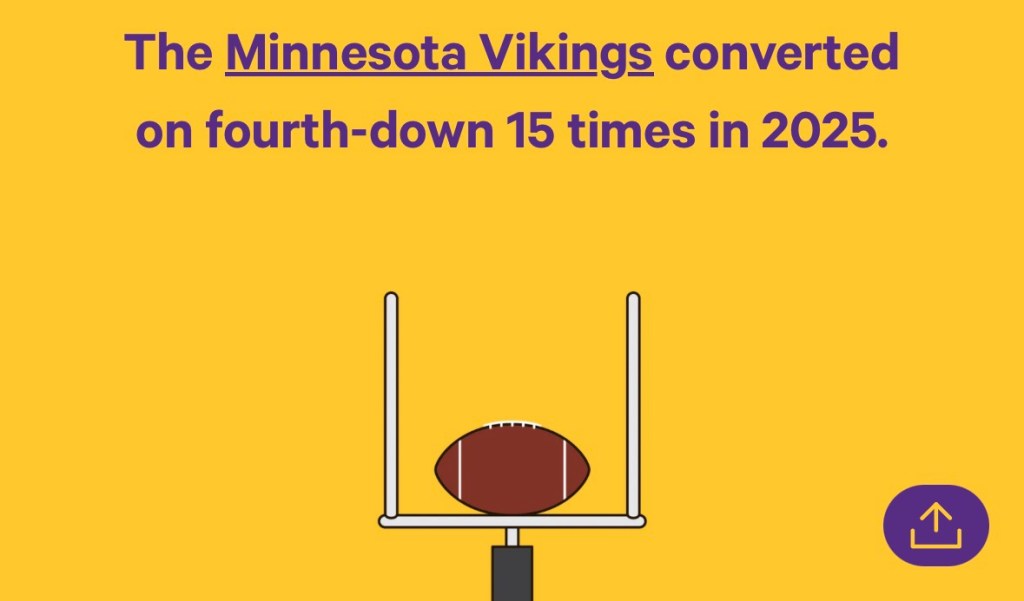
These conversions don’t always work, but the Vikings have been stronger in this area. Since 2025, they have converted on fourth down about 53% of the time. They have ranked in the top half of the league every year during KOC’s tenure.
Overall, KOC tends to be on the more aggressive side, which can come back go bite the team. Luckily, the Vikings have Brian Flores at DC still, allowing the offense to be more aggressive.
It will be interesting to see what fourth down wrinkles open up with Kyler Murray, if he is the starting QB. The threat his legs bring will force defenders to hesitate, but he is not a threat for QB sneaks and dives in short yardage scenarios.
Whether Kyler or J.J. start on Sundays, expect to see creativity in fourth down plays, with the same home run shots on the middle downs.
Final Thoughts
I’m a fan of KOC’s scheme, and I think it has proven to be a positive throughout his tenure. I know some find frustration with the early play calls, and it can be tough when a play doesn’t result in a positive gain to get started.
I see opportunity with more early down run calls, and quick pass plays to get a quick gain. As I mentioned, KOC views first down as a chance to force a defense to play on their heels, but getting positive gains on first down can create big play chances on second/third and short plays.
With the NFL trending to more aggressive fourth down risks, I don’t mind the third and short shot plays more than others. Is it risky? Absolutely. However, it’s a gamble that is worth it, especially when if you have confidence on fourth and short play calls.
A stronger run game is needed, especially to better convert short-down plays, and to better open up passing lanes for Jefferson, and the rest of the weapons on offense. The use of McCarthy’s legs last year was great to see, and I can’t wait to see what KOC does with the QB runs this season.
I appreciate you all for reading this series, and I hope you found value in these write ups. This is laying the bedrock for the upcoming season, and I will be doing offensive game breakdowns this season to further explain KOC’s scheme and the wrinkles he may bring this year.
With the draft later this week, I’ll be doing a breakdown of each pick and how they fit within the scheme, so make sure to come back next week to learn more!
Thank you for taking the time to read my latest article! If you enjoyed the read, please support the blog by liking and commenting below. Sharing with your friends and family would go a long way as we continue to build this community. And as always, SKOL!

 Skol To Go
Share your thoughts